



















USG extends test optional admissions for 2025-2026 academic year
The University System of Georgia (USG) will continue to temporarily waive test score requirements for admission for Academic Year 2025-2026 at 23 of the 26 USG institutions.
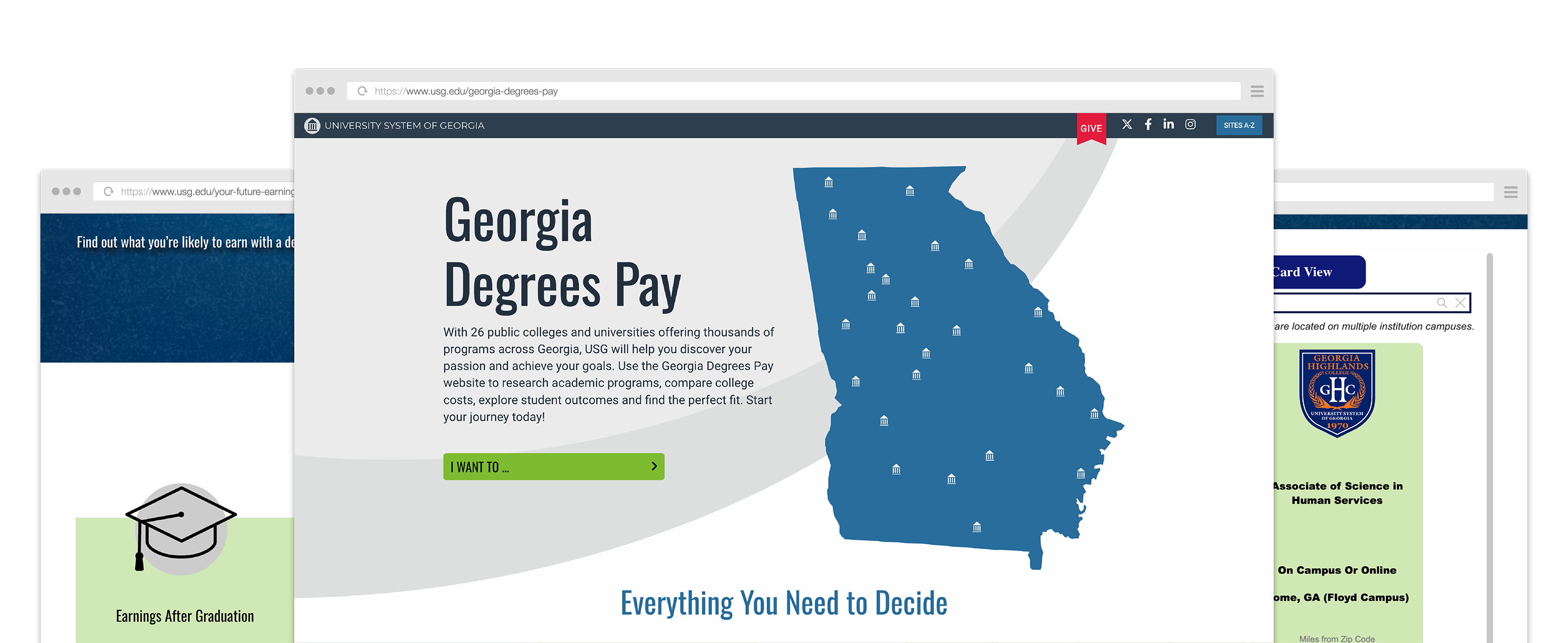
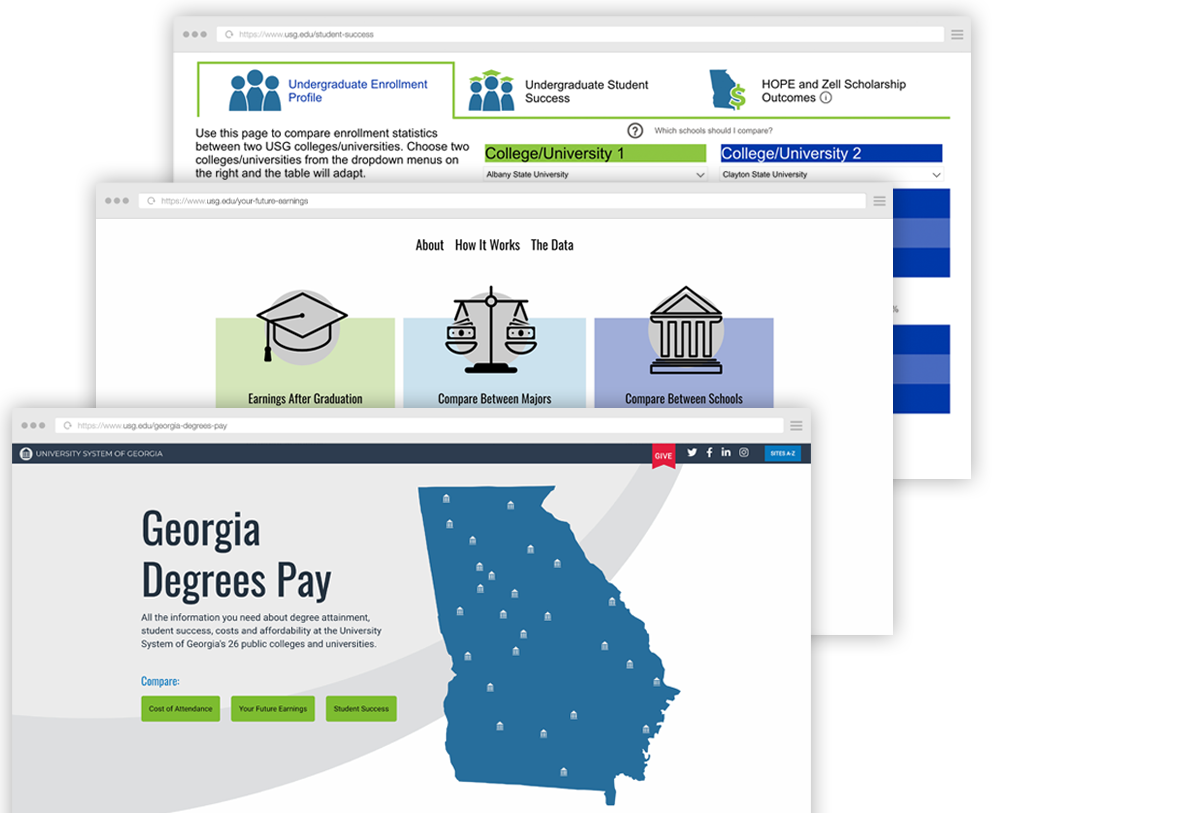
The University System of Georgia is comprised of Georgia's public colleges and universities, Georgia Archives and the Georgia Public Library Service. Visit our institutions page for a comprehensive list.

The University System of Georgia (USG) will continue to temporarily waive test score requirements for admission for Academic Year 2025-2026 at 23 of the 26 USG institutions.

A roundup of impactful stories from University System of Georgia's institutions.

The University System of Georgia has launched a new career planning tool for students at its 26 public colleges and universities to provide additional career counseling services and connect them to information about the field they want to work in.
University System of Georgia (USG) Chancellor Sonny Perdue named USG’s Chief Operating Officer Teresa MacCartney as interim president of Georgia Southwestern State University, upon the departure of President Neal Weaver this May.
The Board of Regents of the University System of Georgia (USG) voted to approve tuition rates for the 2024-25 academic year at USG’s 26 public colleges and universities. Systemwide, in-state undergraduate tuition will increase by 2.5%, and out-of-state tuition will increase by 5%. A new, third level of tuition for out-of-country students will also be established at 2% more than the rate for out-of-state students.
The Valdosta State University (VSU) debate team took home a unique, handcrafted wood trophy as the inaugural winner of the University System of Georgia’s (USG) Regents Cup Debate Series.