Main Navigation

Chancellor's State of the System Address, January 16, 2008

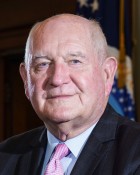
Chancellor Erroll B. Davis, Jr.
"State of the System"

Chancellor Davis gave his State of the System Address to the Board, which was as follows:

Thank you very much Mr. Chairman. It is that time of the year again where people do a lot of reporting. You are going to have a State of the System report this morning, a State of the State this afternoon and a State of the Union later this month. If you are, at this point in the cycle, unfortunate enough to still be an investor in equities you will be receiving annual reports. Those are always occasioned by a two or three page glossy letter where she or he describes what went on for the year and, of course, takes credit for the work of others and explains why they did not meet objectives, if they did not meet them. As I was putting together my remarks, I had in front of me an annual report from one of my dear deceased friends, Jack Puehlicher, who was the head of the M&I Bank in Wisconsin. Jack’s report to the shareowners essentially said, “We tried a lot of things this year. Some of them worked, some of them did not. On balance, it was a good year. Thank you very much for your support.” That was one of the better annual report letters that I have read, but since words are our currency, I decided I would spend just a tad longer than Jack did, conveying to you the state of this System. I will, however, use his words. We tried a lot of things. Some did work, some did not, but, on balance, things went rather well and we are in good shape. Let me expand upon that just a little bit.

Next month will mark my second anniversary as Chancellor. As I look back on those two years and what we have been engaged in, we have worked together not only to assess the System’s capabilities, but also to enhance those capabilities, and to develop plans to move the System to higher levels of performance. Thanks to your work over a year and half period, we now have a new Strategic Plan and we are executing according to that plan. As you saw today, the things that we bring before you, the presentations, our actions, are going to be increasingly couched in terms of how they relate to our Strategic Plan. We also have strengthened our System and its capabilities with the addition of a number of very talented individuals about whom I am quite excited. Running the System as a true System was a challenge you gave me and it has been a focus of mine over the last two years. Last year we celebrated the “lessons of history” of our 75th anniversary and it reminded us of how a strong system better serves this state. But we also must make things run better as a System. That is a subtle, but critical point. Last year, I outlined the main goals upon which we would focus our efforts to run as a better System. Those goals have not changed. Bear with me while I repeat the goals I discussed last year: it is important to remind ourselves and to use them to gauge our progress and record our activity.

Our primary mission is to educate. Our first goal is to admit more students. We are doing that. We continue to grow and our fall 2007 enrollment was an all-time System record high of 270,022 students. This represented a 3.9 % increase from fall 2006 to fall 2007. It also represented an additional 10,077 students in the system. That is the equivalent of adding another Valdosta (State University) or (University of) West Georgia. So, we grew by a large university this year. Our second goal is to keep those students in school and progressing, and the third is to graduate more students. We talked about leading indicators and lagging indicators. The first leading indicator on graduation rates is retention rates. Our latest first-year retention report, covering fall 2006 to fall 2007, indicates we are essentially holding steady on retention at just under 73% for our institutions. That is a number that will be compared nationally. However, we also look our System number. While it is 73% at our institutions, it is 78% for our System. Our students do move around within the System, and while that may penalize an individual institution’s statistic, it is a statistic that we keep our eye on from a System perspective because based on how one views the future, we may see even more movement between our institutions. What is positive is about that statistic is that, although we held steady, it is applied to a much larger cohort of freshmen. Our freshman retention rate increased from 37,900 to almost 40,000 from the previous year. We also see some real improvement in graduation rates for the most current six-year cohort, which entered the System in fall 2001. The institution-specific rate increased from 49% last year to 51%this year; the Systemwide rate increased from 56% to 58%. That was a critical hurdle for us. This is the first time in our history that institution-specific, six-year graduation rates have ever exceeded 50%. We are now graduating, within a six-year period more than half of the students who enroll in our System. To put this in context, the most recent national institution-specific six-year rate, for the entering cohort of 1999, was 55.8%, placing Georgia 37th in the nation. If all other states stayed exactly at the same rate over the last two years, the new USG rate would put us at 33rd in the nation, right below Texas. But, as all of you who are engaged in commerce know, while you are attempting to get better, your competitors are attempting to get better as well. Although we do not yet have updated data on our competitors, let me state that even if they do stay the same, moving from 37th to 33rd is not exactly something to celebrate. It is movement in the right direction but is not good enough for us in this state and we will keep the focus on in this area.

Clearly, we are making important and measurable progress toward these three goals: we are enrolling more students; we are keeping more students in college; and we are graduating more individuals to contribute to Georgia’s economic and intellectual growth and quality of life. The Strategic Plan’s goals, as you know, maintain our focus on these three critical and central measures of our effectiveness. In meeting these three goals, I also noted last year that the University System’s challenge is not to just do this for a small, elite cohort of students, but to educate more and more Georgians to higher levels than in the past.

In order to meet our goals, we will continue to keep our focus on increasing access, maintaining affordability, and providing clear accountability for our actions and for the use of the resources we have been given. On the first two, access and affordability, we are doing well. Our fall enrollment report indicates we continue to see strong enrollment gains, particularly, at our two-year access institutions and our state colleges. Two-year college enrollment grew from fall 2006 to fall 2007 at a 6% rate and the state college increase was almost 9%. As we look at the composition of those students, African-American enrollment increased by more than 5%. We have 65,000 African-American students who represent 24% of total University System enrollment. Hispanic enrollment in the System continues to increase at double-digit rates, with an almost 13% jump, to 8,800 students in fall 2007. The total minority enrollment in our System stands at about the 40% level.

In terms of affordability, our guaranteed tuition plan continues to create, I believe, tremendous educational value for our students. At the comprehensive university level, Georgia continues to be the most affordable state in the 16-state Southern Regional Education Board for public higher education tuition. We also rank near the top nationally in terms of affordability. I like to say we have the best of both worlds, that is, low tuition and high quality. Whether we can sustain that at current tuition levels will remain a challenge and a source of contention between the System the Office and the campuses, but we will continue to maintain our focus on reasonable college costs. In the third area of accountability, I think the past year has shown the System continues to make progress. We are an increasingly transparent organization and continue to provide strong measures of accountability to our customers and our funding partners. That we enjoy a strong level of public support is abundantly clear. It is clear from the data and from the facts. For example, last year, Governor Perdue recommended and the General Assembly approved, a record $2.1 billion state appropriation to operate this System. We also received $276 million for construction and renovation of our facilities, for this fiscal year. This represented a 10.5% increase over FY07 and represented the largest increase in state funding for the University System in the last 12 years. As I have noted in various editorial board meetings and in public appearances, this is extraordinary when compared to many other states and systems. We have strong support for our mission, and we do need to continue to thank the Governor and the members of the General Assembly for their collective attention to and continuing support for public higher education in Georgia. That attention and support is having a significant, positive influence on the educational attainment of thousands of citizens and on the economic condition of hundreds of cities across the state.

We do, however, have our challenges. As we have worked to be transparent, we also have clearly indicated that we have to address some serious challenges in the operation of this $5.7 billion enterprise. Looking at the academic side of the house, my personal assessment is that we have thousands of truly outstanding faculty at work on our campuses. These faculty members are highly dedicated and challenge our students to learn, but more importantly, to create new knowledge and ideas to take into the world. Thanks to our faculty, I feel that we do create a transformative experience for our students in our classrooms and labs. I meet constantly with student groups. I have probably met with between 75 and 90 student groups over the last two years, and I have yet to hear a single complaint about the quality of teaching in our System. I think that is an outstanding tribute to our faculty and what we do in our classrooms.

Our level of risk management however, is not at the consistent quality of our academic commitment. It is no understatement to say that 2007 surfaced a number of challenges to the System. These can be grouped into generalized challenges and specific challenges. Let me briefly look at the specific challenges first. The first challenge is to manage explosive growth and our growing funding needs. As I noted, our Strategic Plan has a focus on both capacity and on the nature of the core academic experience. A second challenge is to address faculty compensation. In order to continue to strengthen the quality of faculty and staff and to keep excellent performers in the System, we simply have to pay people at market rates. We cannot wish for, hope for, and get, world class outcomes without competitive salaries. It is no less important in the public sector than it is in the private sector. But, I also have said, we cannot approach this from a point of view that says, “We’re bright and good-looking, so, give us the money.” It does not work that way. Everyone has to understand and meet rational expectations for performance and for adding value to the people of this state. We also need to understand that as we increase transparency, we should expect that expectations from our customers and our funding partners will also increase.

Another challenge is to get past the unnecessarily complex politics of medical expansion. The issue of more doctors and of more nurses and of more health professionals is not a local issue. This is a statewide issue. Any delay in increasing the production of more health professionals puts the health of Georgia’s population at risk. While we have been debating where doctors should be trained over the two years, Georgia has slipped from 37th to 40th in doctors per capita. We must move forward with a comprehensive, statewide plan to meet these needs, and we must move forward without delay. We do have a plan in place and we do now have a roadmap that will allow us to do that. The generalized challenges I see can be grouped into two areas. First is the need to execute our plans with discipline. The second generalized challenge is to simply run the enterprise with a higher degree of accountability by management and leadership at every level. If we do not meet these two challenges, we lose the ability to follow through on our plans and thus will undermine, if not lose, public support for our work.

What can we say and do about execution and management? First, it is our job as managers and leaders to rapidly fix things that go wrong. However, I believe our greatest leadership responsibility is to make sure things do not go wrong in the first place. If we are smart enough to solve problems, we are smart enough to prevent them as well. To achieve this however, may require a slight shift in our overall leadership focus. We focus a great deal of attention on our academic mission – as we absolutely should and must. However, we also must focus a growing amount of attention on the need to create a pervasive culture of continuous improvement and thorough risk management throughout the System. Issues such as P-cards and tuition residency violations are not the problems; they are merely indicators of the need to improve our overall risk management. We must understand as a System that the public will not trust us to do the good and great things expected of us if they cannot trust us to do the routine and the mundane.

Looking ahead, I believe the year 2008 will be another year of academic excellence and intellectual discovery. But, it will also be a year of focused plan execution and a year in which we continue our push for higher levels of transparency and accountability at every level. This state and its citizens have been very generous to the University System in terms of providing resources. While it is a matter of constant debate between me and my colleagues, my view is that the level of resources we receive is not our primary challenge. Our primary challenge is the proper and strategic use of those resources. That is why we must execute our plans with discipline and focus. As Jim Collins, the author of Good to Great, notes, these are not business principles. These are leadership principles. Our System projects, as they move forward, will begin to address some of these specific and generalized challenges. Our Strategic Plan will help us focus on execution. This System is continuing to add tremendous value to this state, as it always has. We are transforming the lives of thousands of individuals, and in the process, strengthening this state and this nation as well. I am very fond of saying that we create the middle class, and no vibrant democracy can be sustained without a growing and vibrant middle class. That is what we do and we receive strong support from our funding partners. We are making good progress toward our goals of enrolling more students, keeping those students in college and graduating more students. Finally, we must, and we will, create a culture that understands and manages with excellence to prevent problems that undermine our ability to keep making progress on our larger goals.

In summary, the State of the System today is good when measured against a number of key indicators. We do excellently in spots, but, as always, we can do better overall, particularly in how we manage both our operations and the resources that have so generously flowed to us. And, we will do that. I want to thank this Board, our presidents, the faculty and staff at our 35 degree-granting institutions and Skidaway, for their dedication and unceasing efforts to transform lives and strengthen this state. Your work as Regents continues to provide the vital direction for our efforts. I wish I could share with you the contagious enthusiasm we have about the outcomes from our planning session. Your dedicated efforts continue to help shape the destinies of thousands of individuals. You truly help to transform lives. This is the work we do, transforming lives. It is a tremendous task, but it is one we all undertake with both great joy and great resolve, and one with tremendous rewards for all. Thank you.

return to top